
The Strategy of Weaving: How Verdant Bags Mirror the Game of Go

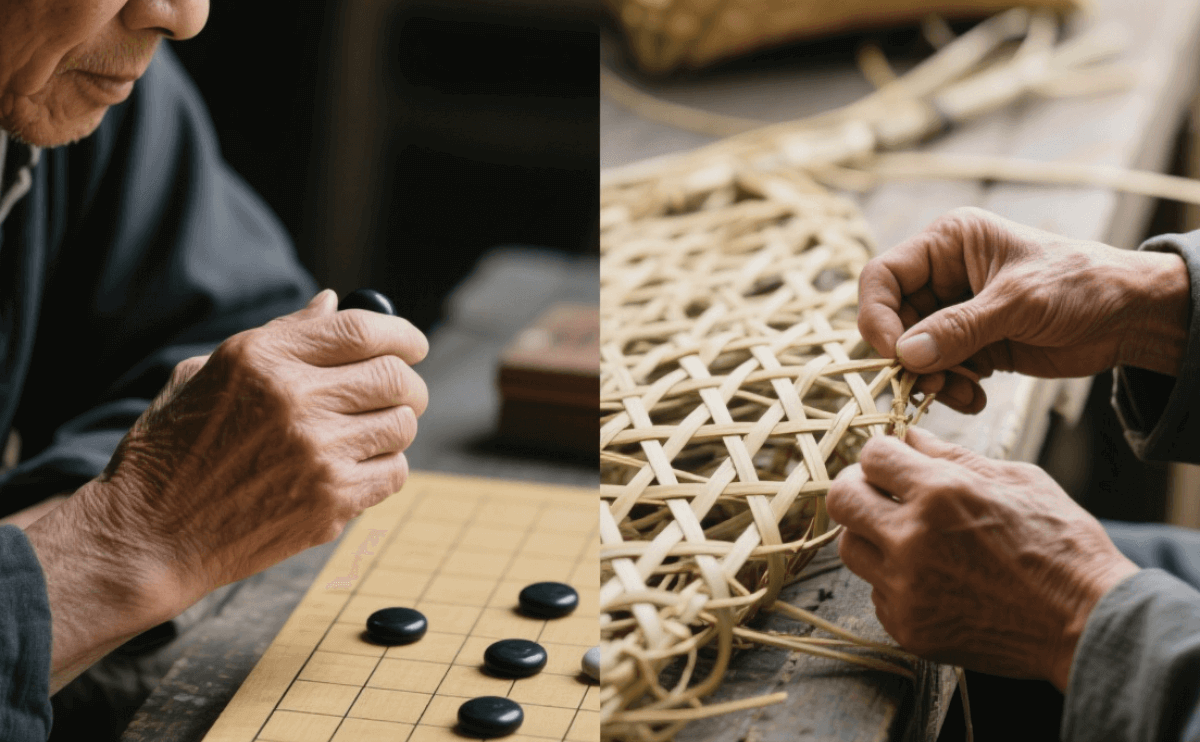
Every Stitch is a Move, Every Bag is a Masterpiece
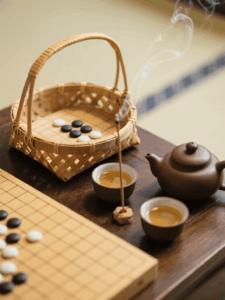
棋 (Go) in Chinese Culture
围棋 (Go), the ancient game of strategy, is more than a pastime—it’s a philosophy. For centuries, players have revered its:
Balance of Black and White: Simplicity with infinite complexity.
Patience and Precision: Every move shapes the outcome.
Respect for Space: Empty areas hold as much meaning as occupied ones.
At Verdant, we see our woven bags as a tactical game between nature and craftsmanship, where every bamboo strip is a deliberate move toward beauty and sustainability.
1. The Weaver’s Board: Bamboo as the Grid
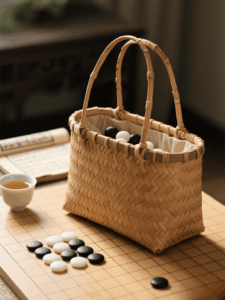
Just as a Go board is a grid of 19×19 lines, our artisans work on a textural grid:
Warp and Weft = Vertical and Horizontal Lines: Each intersection is a potential “move.”
Strategic Emptiness: Like leaving “eyes” in Go, we leave gaps for breathability and flexibility.
No Two Alike: Every bag, like every Go game, is unique.
Featured Piece: The Go Tote—its checkerboard weave mimics a Go board, with subtle leather “stones” as accents.
2. The Opening Game: Designing with Intent
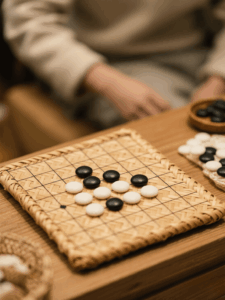
In Go, the opening moves set the tone. For Verdant, this means:
First Move (Fuseki): Selecting the finest bamboo stalks (no synthetic fillers).
Second Move (Joseki): Hand-splitting fibers for consistent thickness.
Third Move (Tenuki): Adapting to natural variations—knots become design features, not flaws.
Pro Tip: Pair our Stratagem Clutch with structured outfits for a “calculated elegance.”
3. The Endgame: Sustainability as Victory
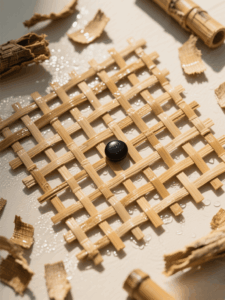
In Go, the goal is to control space with minimal waste. Our bags follow the same principle:
Zero-Waste Weaving: Offcuts become tassels or repair kits.
Biodegradable “Stones”: Coconut shell buttons replace plastic.
Long-Term Thinking: Bags designed to age like a well-played Go board—gaining character over time.
Final Thought
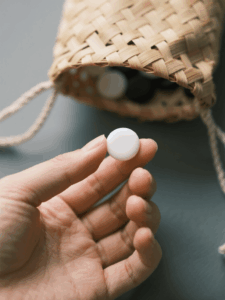
Go teaches us that the wisest moves are often the quietest. Verdant bags don’t shout their sustainability—they prove it, stitch by stitch.