
The Art of Qin & Weaving: How Verdant Bags Echo China’s Oldest Harmony

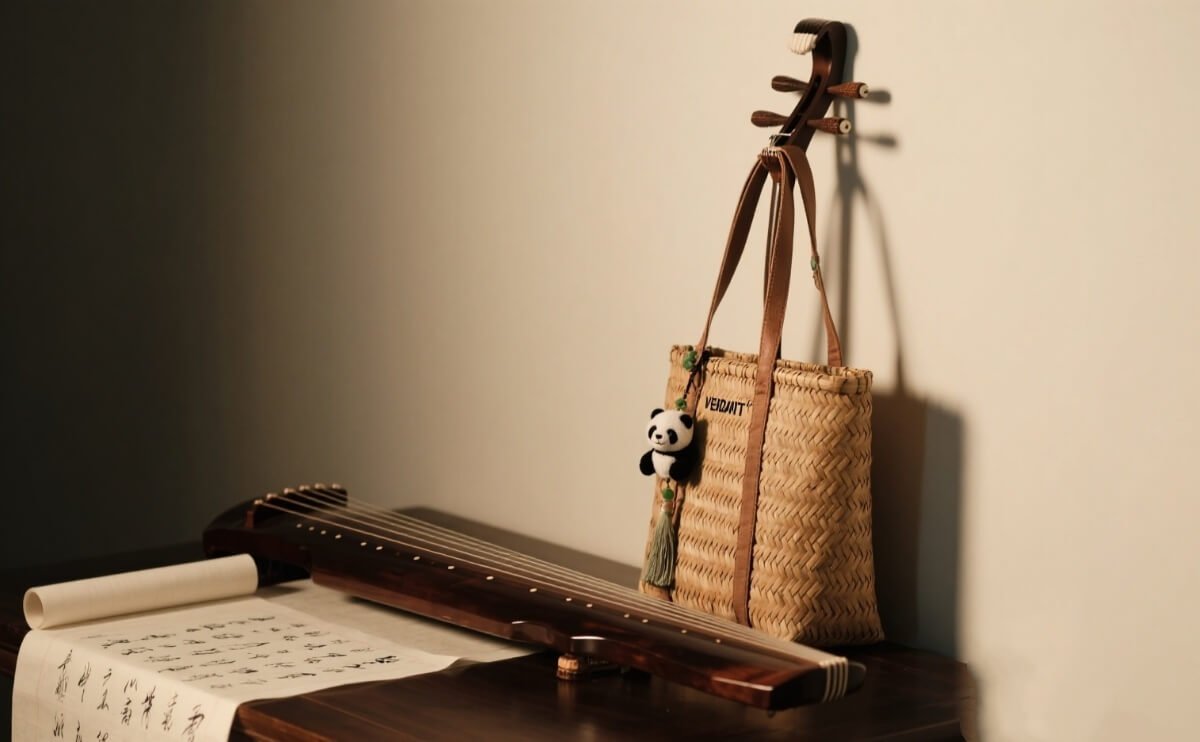
Where Bamboo Strings Meet Bamboo Threads
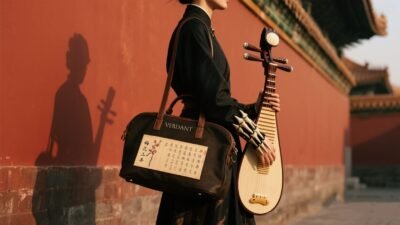
琴 (Qin) in Chinese Culture
The guqin (古琴), China’s most revered instrument, embodies silken tension—its bamboo strings vibrate with restraint, much like the tensile strength of our woven fibers. For 3,000 years, musicians have prized its:
Natural materials (silk strings, paulownia wood body)
Imperfections (knots in wood grain enhance resonance)
Silent pauses (the space between notes matters most)
At Verdant, we channel this philosophy into bags that sing through simplicity.
1. The Weaver’s ‘Strings’
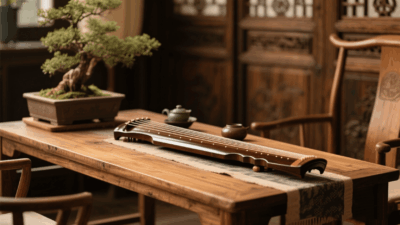
Our artisans treat bamboo strips like guqin strings:
Hand-split fibersretain natural elasticity (no synthetic stiffeners)
Seven-layer warp-weft weaving mimics qin string spacing
Sound test:A tightly woven tote base hums when flicked (C# note ideal)
Featured Piece: The Zither Tote—its shoulder strap adjusts like a qin tuning peg.
2. Design as Musical Notation
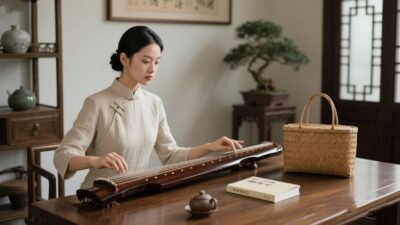
Guqin notation (減字譜) uses abstract symbols. We translate this into:
Stitch patterns = musical phrases (e.g., cloud纹=glissando)
Color gradients = harmonic overtones (indigo→ivory like a fading note)
Asymmetrical tassels = deliberate dissonance
Pro tip: Pair our Etude Clutch with monochrome outfits—let the texture be your melody.
3. The Silence Within

A master qin player leaves space between notes. Our bags honor emptiness through:
Lightweight frames(30% less material than leather bags)
Negative space weaving (airflow cools contents)
Unlined interiors(showcasing honest craftsmanship)
Final Thought

The qin teaches that true luxury whispers. Verdant bags don’t shout—they resonate.