
Straw Sandals: The Footprints That Crossed Mountains, Battlefields, and Migrations

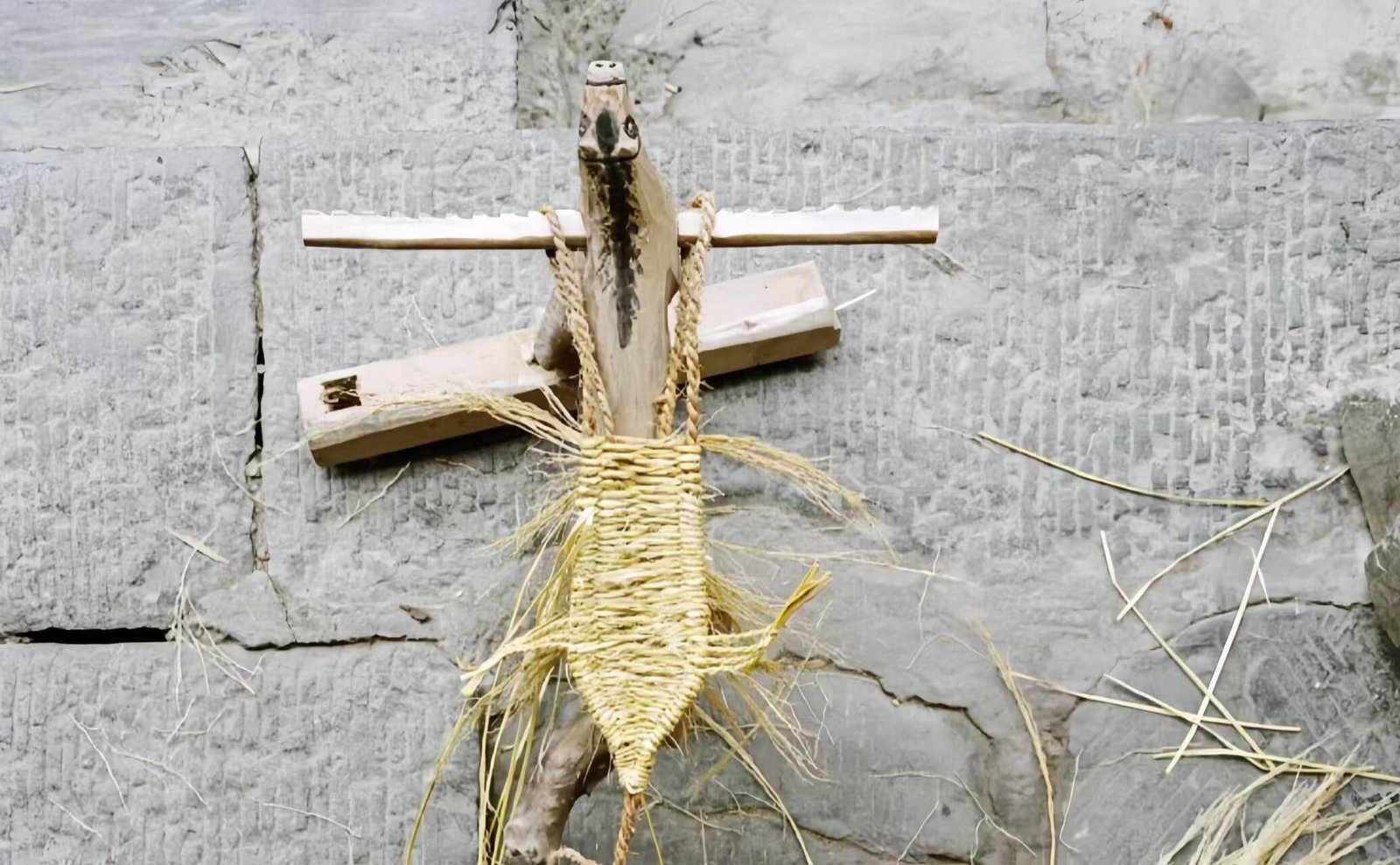
You may have seen straw sandals before.
But you may not know that they once carried people through the longest journeys of their lives.
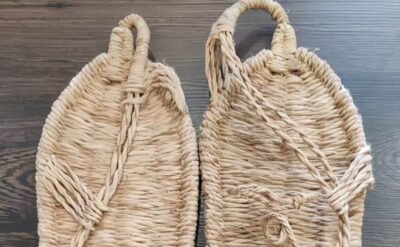
1. The First Pair at Dawn
Before sunrise, the scent of fresh straw drifts from behind the village.
An elderly craftsman sits at the doorstep, fingers brushing through bundles of rice straw—soaked in night dew, soft and obedient.
He twists the straw into two thin ropes, places one end between his toes, and weaves the sole the way one would weave cloth.
With a crisp snap, the first pattern takes shape.
People who weave straw sandals always start before dawn.
Because at this hour, the straw is at its most flexible—
and most capable of carrying a tired traveler forward.
2. How Far Can One Pair of Sandals Go?
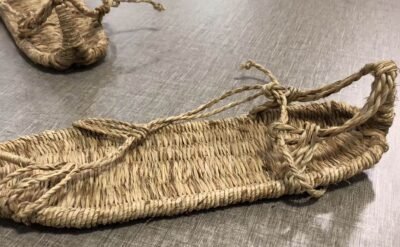
In ancient times, men who worked the land walked over mountains, valleys, and riverbanks.
Every frayed loop of their sandals marked another day of labor.
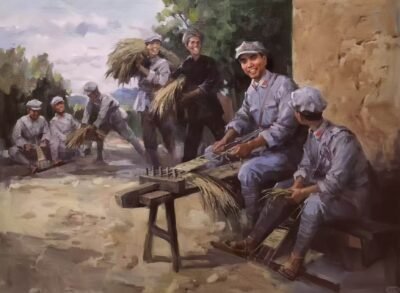
Soldiers wore straw sandals into battle,
their soles woven denser than usual,
because the road was long, and stones were sharp.
Some added an extra layer to the toe so their feet wouldn’t break through halfway.
Straw sandals were never made for beauty.
They existed for one purpose only—
to help a person keep moving.
3. The Migrations That Carried a Family’s Hope
In old folktales, people often speak of “the road of fleeing famine.”
In these stories, straw sandals are not shoes—
they are the last bit of dignity a family carries with them.
The elders save the best straw for the children,
because a child’s feet are soft.
Mothers weave extra layers into the soles,
knowing the mountains ahead show no mercy.
On rocky paths, straw sandals always fell apart first.
But when the sandals gave out, the people kept walking.
And wherever there was grass, someone would kneel down and weave another pair.
To keep going—that was survival.
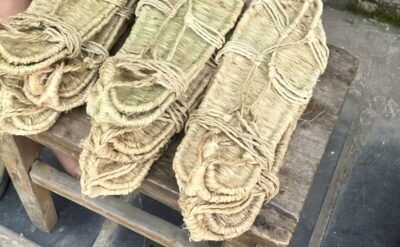
4. The Last Straw Sandals in the City
Until the early years of China’s economic reform,
street vendors in cities like Shanghai, Guangzhou, and Chengdu still carried straw sandals on bamboo poles—
dozens of pairs hanging like pale moons from the yoke.
Construction workers bought them.
Port laborers bought them.
Because straw sandals were light, breathable, and gentle on the feet.
But most importantly—they were cheap.
Everyone wants to walk a little more comfortably,
even if only by a little.
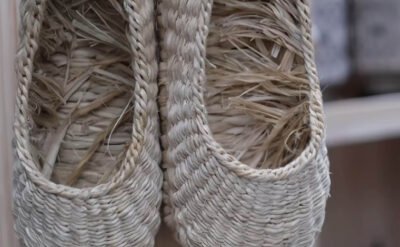
5. Why Straw Sandals Still Matter Today
Because straw sandals were never just shoes.
They were the symbol of a people’s quiet, stubborn dedication to life.
Their patterns were never perfect.
Edges curled, fibers loosened.
But perfection wasn’t the point.
Every person who wore them was saying with each step:
“I still have strength. I will keep going.”
The meaning of weaving has never been about technique—
it is about the moment someone holds life in their hands again.
And that is why objects made of woven grass
still feel warm in the present day.